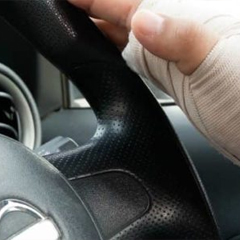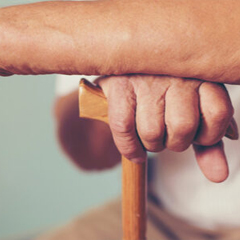



Why Understanding Wrist Ligaments is Critical for Your Health
Your wrist is a small space packed with eight carpal bones, multiple joints, and dozens of ligaments. Those ligaments act like high-tension cables: they hold the bones in place, guide motion, and absorb shock every time you type, lift, or catch yourself during a fall.
Quick Overview: Essential Facts About Wrist Ligaments
- Function: Connect bones and guide wrist movement while providing stability
- Types: Intrinsic (within the wrist) and extrinsic (connecting forearm to wrist)
- Key Players: Scapholunate, lunotriquetral, and triangular fibrocartilage complex
- Common Injuries: Sprains from falls, sports trauma, and repetitive stress
- Healing Time: 8-12 weeks for ligament repair; up to 12 months for full recovery
- Treatment: Ranges from rest and splinting to surgical reconstruction
Even minor ligament damage can lead to long-term pain or arthritis if ignored. The following sections explain how these structures work, how they get hurt, and—most importantly—how you can keep them healthy.
Understanding Wrist Anatomy: The Role of Ligaments
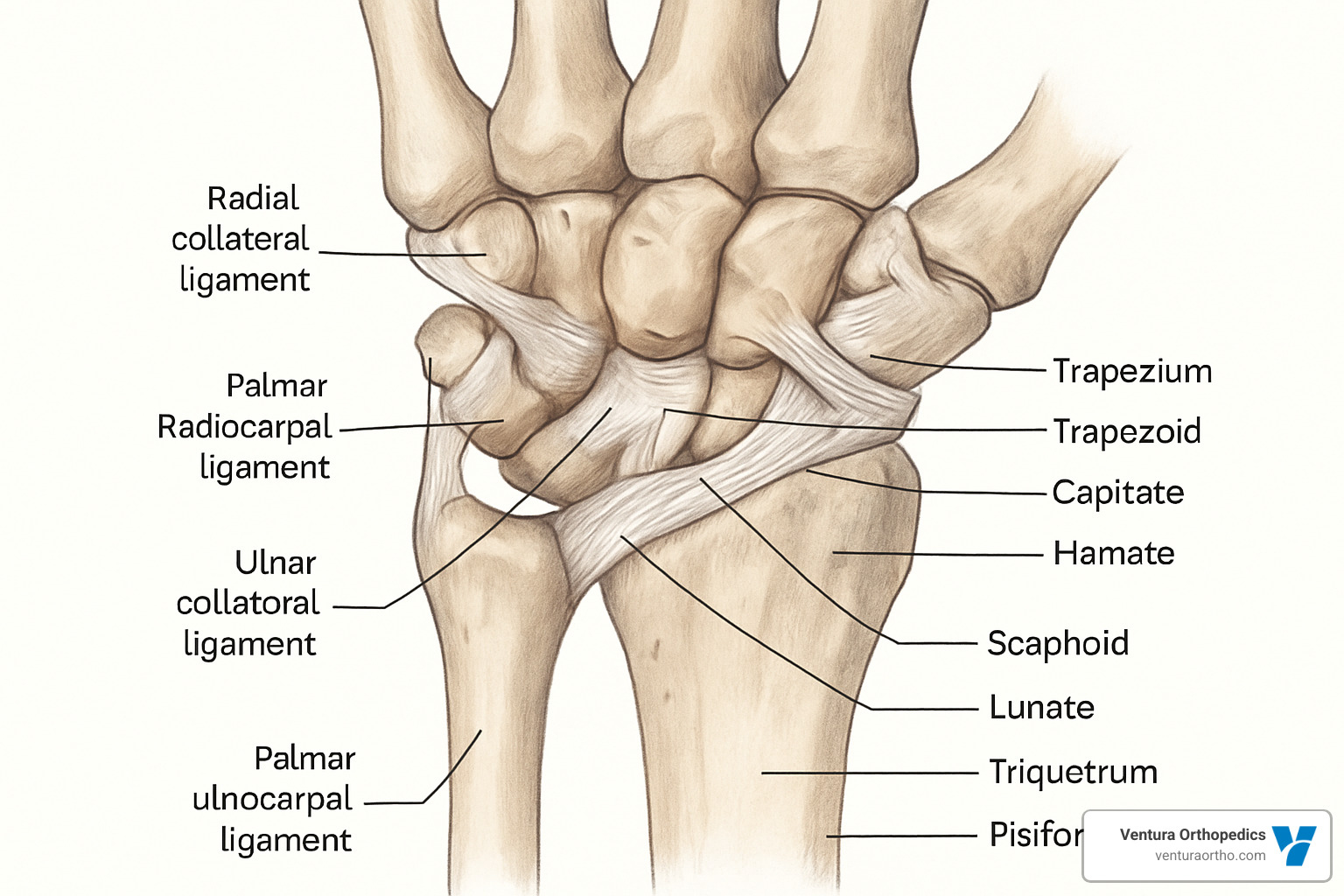
Ligaments are tough collagen bands that connect bone to bone. In the wrist they hold eight carpal bones together while still allowing a surprisingly wide range of motion—about 50° of flexion, 35° of extension, and small but important side-to-side movements.
Intrinsic vs. Extrinsic Ligaments

- Intrinsic ligaments sit wholly inside the wrist and keep the carpal bones aligned.
- Extrinsic ligaments run from the forearm bones (radius and ulna) to the carpals, stabilizing the entire joint when you push, pull, or lift.
Because we push on our palms far more than the backs of our hands, the volar (palmar) ligaments are thicker and stronger than the thinner dorsal ligaments.
Key Ligaments of the Wrist
| Ligament | Main Job |
|---|---|
| Scapholunate (SL) | Prevents scaphoid rotation; key carpal stabilizer |
| Lunotriquetral (LT) | Keeps lunate-triquetral joint aligned |
| Triangular Fibrocartilage Complex (TFCC) | Stabilizes the distal radioulnar joint and spreads load |
| Radioscaphocapitate / Long & Short Radiolunate | Resist ulnar drift; anchor proximal carpal row |
| Dorsal Intercarpal | Dynamic scaphoid support |
Wrist Ligament Injuries: Causes, Symptoms, and Classification
Most sprains happen during a FOOSH—a fall on an out-stretched hand—but contact sports, repetitive tasks, and sudden twists can overstress ligaments too.
Typical symptoms include:
- Pain with gripping or twisting
- Immediate swelling and later bruising
- Clicking, popping, or a feeling the wrist might “give way”
- Reduced grip strength
How Doctors Classify Sprains
| Grade | Damage | Recovery* |
|---|---|---|
| 1 | Stretched fibers | 1-2 weeks light activity |
| 2 | Partial tear | 6-8 weeks |
| 3 | Complete tear | 8-12 weeks (healing); up to 12 months full recovery |
*With prompt treatment.
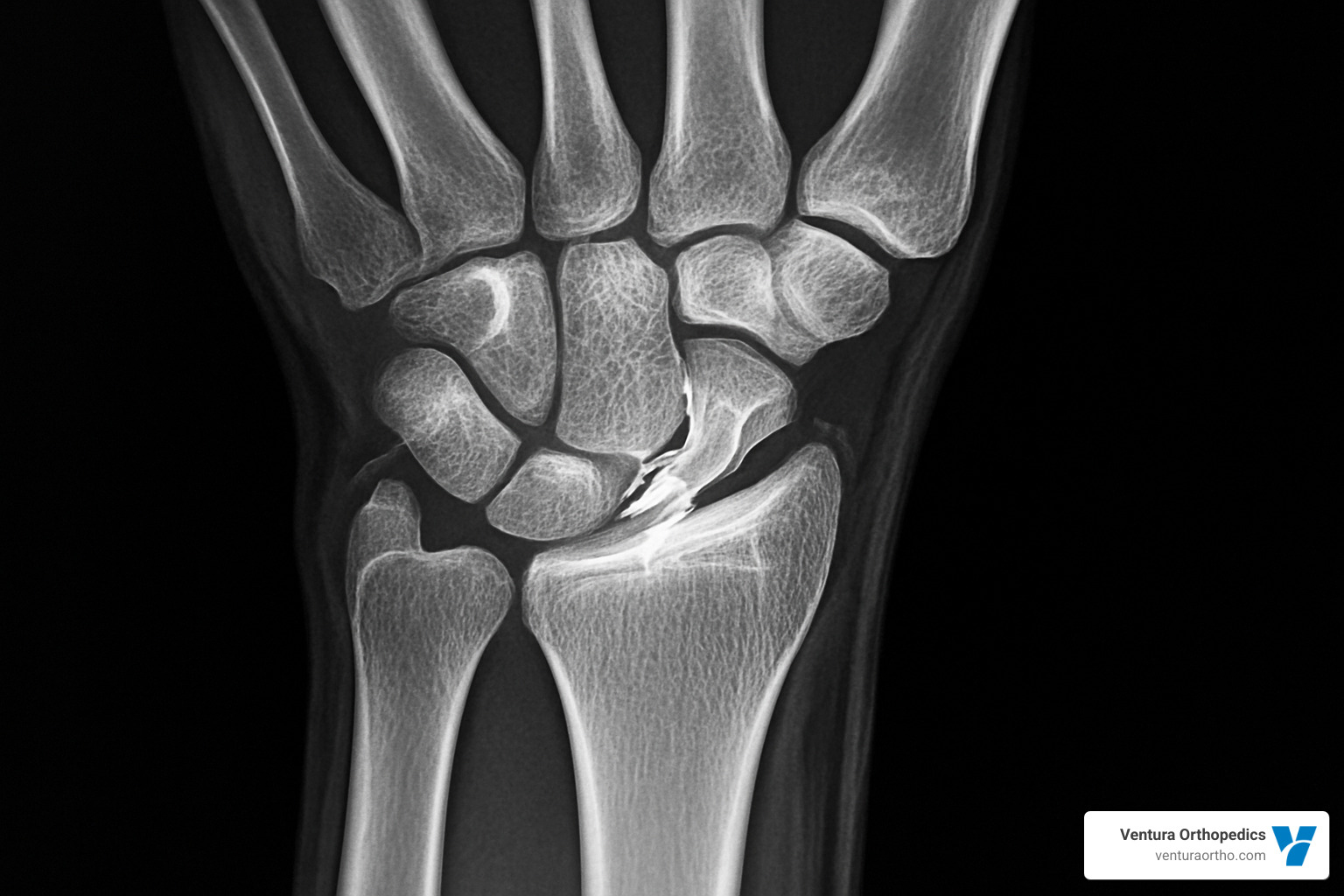
Ignoring a tear can lead to chronic instability and post-traumatic arthritis (for example, SLAC wrist), so early evaluation matters.
Diagnosing a Wrist Ligament Injury
Persistent pain (>48 hours) or any sense of wrist “giving way” deserves medical attention.
The Physical Examination
- Visual check for swelling, bruising, or abnormal alignment
- Palpation for point tenderness (e.g., a positive ulnar fovea sign)
- Range-of-motion and stress tests such as Watson’s test to isolate specific ligaments
Imaging
- X-ray – rules out fractures and flags spacing changes
- MRI – 1.5 T is adequate; 3 T MRI improves visualization of wrist ligaments
- MR arthrography – best for TFCC tears (79–100 % accuracy)
- CT or ultrasound – problem-solving tools
- Diagnostic arthroscopy – gold standard when the diagnosis remains unclear
Treatment and Recovery Pathways for Wrist Ligament Injuries
No two wrists (or lifestyles) are the same, so Ventura Orthopedics tailors every plan.
Non-Surgical First
- R.I.C.E. in the first 48 hours
- NSAIDs for pain/inflammation (if medically safe)
- Immobilization: splint for mild sprains; cast 3-6 weeks for moderate tears
- Therapy: guided exercises to restore motion and strength once pain and swelling subside
When Surgery Makes Sense
- Complete tears of key stabilizers (SL, LT, TFCC)
- Persistent instability after conservative care
- Acute high-grade injuries in active patients
Time is critical: primary repair works best within about one month of injury; after that we often need reconstruction or temporary pinning.
What Recovery Looks Like
| Injury | Light use | Full activity |
|---|---|---|
| Grade 1 | 1-2 weeks | 4-6 weeks |
| Grade 2 | 3-4 weeks | 8-12 weeks |
| Grade 3 (repaired) | 6-8 weeks | 6-12 months |
Post-op milestones typically include suture removal at 2 weeks, pin removal at 4–8 weeks, and formal therapy once the repair is protected.
Preventing Wrist Ligament Injuries
Building strength and using good habits keeps stress off your ligaments.
- Strength: wrist curls, reverse curls, grip squeezes, and resistance-band extension (10-15 reps, 2-3 sets)
- Flexibility: gentle wrist stretches after activity
- Technique: proper form in sports and at the keyboard
- Protective gear: wrist guards for skating/boarding; supportive tape for contact sports
- Fall safety: clear walkways, use handrails, maintain good balance
- Breaks: vary tasks and rest when your wrists feel tired
Call Ventura Orthopedics Today!
Ligaments are the quiet heroes of wrist function, and they heal best when problems are caught early. If you have lingering pain, clicking, or weakness, let our specialists at Ventura Orthopedics help you return to work, play, and daily life without discomfort.
At Ventura Orthopedics, we take pride in being one of California’s oldest orthopedic group practices. But don’t let our age fool you—we’re continuously learning, adopting new technologies, and providing cutting-edge treatments. Our specialists are dedicated to creating personalized treatment plans custom specifically to your unique situation and goals.
Ready to learn more? Visit our hand and wrist team here.
Your wrists are too important to ignore—give them the expert care they deserve.